In-process capture
A native OkHttp interceptor on Android and URLProtocol on iOS, with a JS fetch / XHR / WebSocket fallback where native cannot see traffic. No proxy. No CA certificate.
Local-first network inspector for React Native, the web, Next.js, Android, and iOS. It captures traffic in-process, with no proxy, no certificate, no cloud, and no accounts.
npx hakka init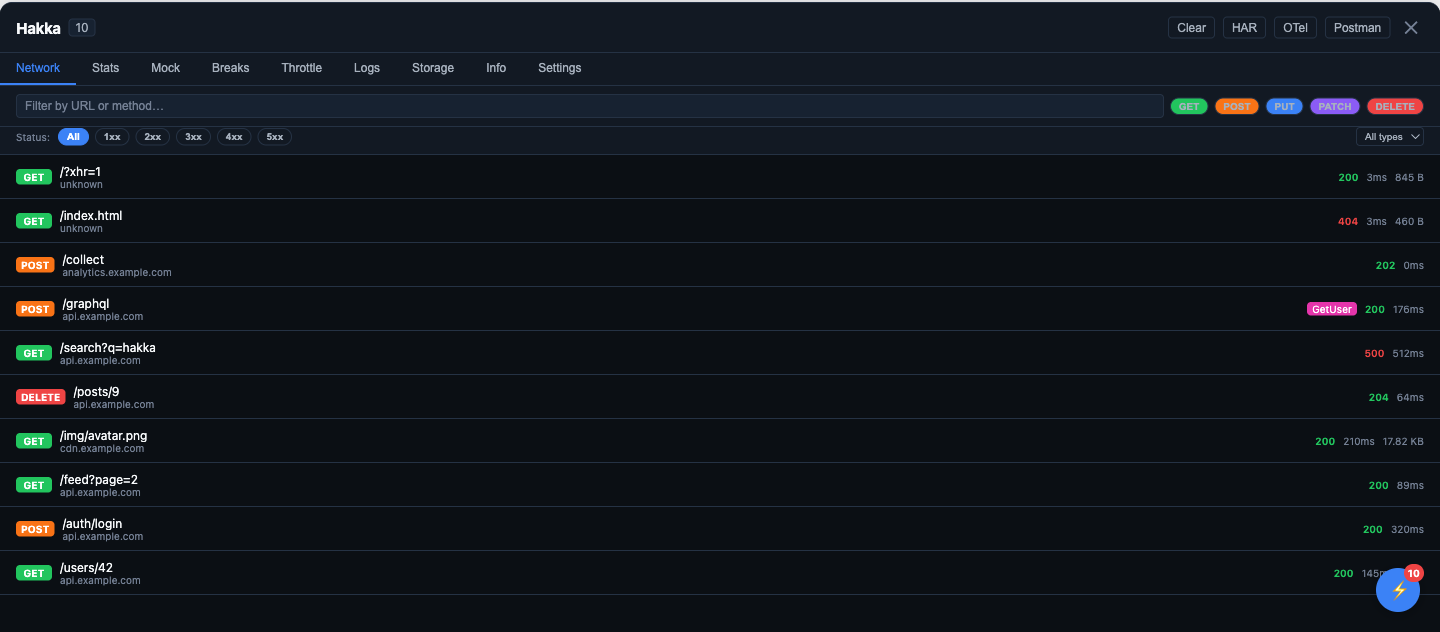
A native OkHttp interceptor on Android and URLProtocol on iOS, with a JS fetch / XHR / WebSocket fallback where native cannot see traffic. No proxy. No CA certificate.
Pause and edit a request or a response while it is in flight, then resume or abort. The Charles and Proxyman trick, in-process, with nothing sitting in the middle.
Canned responses, block an endpoint, Map Remote redirect, rewrite, and network-condition profiles. Test the unhappy path on demand.
One capture, four formats: HAR, OpenTelemetry, Postman Collection, and shell-safe cURL. Hand it to a teammate or replay it later.
Point Claude Code at your live traffic and ask "what 5xx did that button trigger?" against the real requests your app just made. Sensitive headers are redacted at ingest.
Production builds get no-op artifacts, so there is zero overhead in the app you actually ship. Hakka runs in dev and disappears in release.
hakka-core powers every target, so captures, panels, and exports stay identical across platforms while each surface renders native.
Or run npx hakka init to detect your framework and wire it up.
npm install react-native-hakka \
  @react-native-clipboard/clipboard
cd ios && pod install
import { Hakka } from 'react-native-hakka'
Hakka.start({ mode: 'auto' })